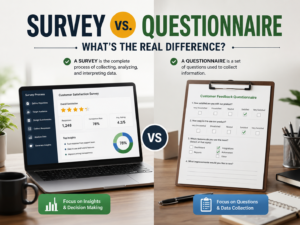



The market research industry faces a dramatic shift. Generative artificial intelligence is changing how market researchers collect, analyze, and trust audience data.
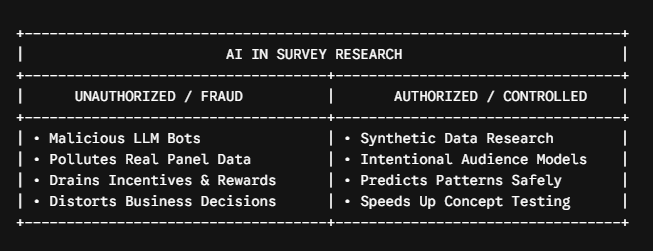
On one side, bad actors use Large Language Models (LLMs) to generate fake, automated responses at scale. On the other side, legitimate researchers use synthetic data models to simulate audience behaviors, speed up testing, and reduce research costs.
Understanding the difference between malicious survey bots and intentional synthetic testing is critical.
In this guide, we break down how to implement robust AI survey fraud detection, shield your research panels from automated scripts, and leverage synthetic testing responsibly.
The Rising Threat: LLM Fraud vs. Synthetic Data
Not all AI-generated survey data is bad. The key distinction lies in intent and control.
What Is AI Survey Fraud?
AI survey fraud occurs when bad actors use automated scripts powered by custom LLMs to complete online surveys. Their goal is simple: drain panel incentives and cash out gift cards.
Because LLMs write fluent, human-sounding text, traditional spam filters often miss them.
What Is Synthetic Data Survey Research?
Synthetic data survey research is the intentional, controlled creation of artificial audience profiles. Researchers use trained AI models to simulate how target customer segments might answer specific questions.
Unlike fraud, synthetic data happens in a controlled sandbox. It never contaminates your real-human respondent pool.
Synthetic Data vs. AI Survey Response Fraud
Knowing the difference between synthetic data vs AI survey response fraud helps researchers protect their budgets while adopting modern tools.
| Feature | Malicious LLM Response Fraud | Controlled Synthetic Research |
| Intent | Steal rewards, fake participation | Simulate trends, test concepts |
| Data Quality | Generic, halluncinated, deceptive | Structured, baseline-calibrated |
| Panel Impact | Destroys dataset credibility | Zero impact on real respondent pools |
| Cost Impact | High financial waste on invalid payouts | Reduces early-stage research costs |
How to Detect LLM Survey Responses and Block AI Bots
Stopping automated scripts requires modern security measures. Traditional CAPTCHAs are no longer enough because advanced LLM scripts bypass them easily.
Here is how to block AI bots from online surveys and spot fake open-ended text.

1. Behavioral Biometrics
- Keypress Dynamics: Real humans vary their typing speeds, pause to think, and make occasional backspace edits. Bots paste large blocks of text instantly or type with rigid, mathematical timing.
- Cursor and Touch Tracking: Human mouse movements follow curved, erratic paths. Automated tools often jump instantly from input field to submit button.
2. Honeypot and Trick Questions
- Hidden Form Fields: Add hidden text fields using CSS. Real humans cannot see them, but automated scripts fill out every field in the code. Any entry instantly flags the session as a bot.
- Semantic Logic Traps: Include simple logic prompts that confuse standard LLMs. For example: “If a ice cube melts in warm water, type the word ‘cold’ in the box below.”
3. Stylometric and AI Pattern Analysis
To understand how to detect LLM survey responses, look for specific linguistic signatures:
- Overly Formal Tone: LLMs frequently use polished phrases like “Furthermore,” “It is important to consider,” or “In conclusion.”
- Repetitive Sentence Structures: AI text often maintains a uniform sentence length across multiple open-ended prompts.
- Vague Generics: Bots generate answers that sound plausible but lack concrete personal details or specific brand references.
The “Survey Flip” Method: Defense Through Better User Experience
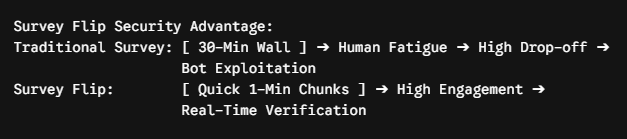
Long, tedious surveys actually invite AI fraud. When real human respondents get exhausted by a 30-minute questionnaire, they give lazy answers or drop out entirely. This leaves your incentive pool exposed to fast-acting bots.
Leading research teams use the survey flip strategy to stop fraud before it starts.
How the Survey Flip Works
Instead of launching one long, 30-question survey, the survey flip method breaks research into micro-surveys delivered in quick, 1-to-2 question chunks across multiple touchpoints.
Why the Survey Flip Enhances Survey Security
- Higher Human Completion: Humans gladly complete 45-second micro-prompts, keeping your real-respondent ratio high.
- Harder Target for Bots: Continuous micro-sessions require dynamic authentication, making it difficult for automated scripts to farm incentives.
- Instant Anomaly Detection: Outliers and bot patterns trigger security alerts immediately on question one, rather than at the end of a long survey session.
Case Study: Protecting a $150K National Brand Study
A US consumer brands firm launched a nationwide feedback campaign with a $150,000 panel budget. They offered a $10 gift card per completed survey.
The Problem: Bot Infiltration
Within 48 hours of launch, the research team noticed unusual activity:
- Completion rates spiked by 400%.
- Open-ended text responses looked grammatically flawless but lacked specific product mentions.
- Over 60% of open-ended answers reused identical sentence structures.
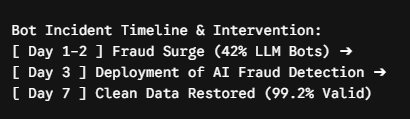
Preliminary analysis showed that 42% of incoming completions were LLM-generated bot responses. The client was on track to waste over $60,000 paying rewards to fraudsters.
The Solution: Deploying AI Survey Fraud Detection
The team paused payouts and implemented a multi-layered security stack using SurveyFlip:
- Biometric Validation: The system flagged any response pasted in less than 0.5 seconds or lacking natural cursor movement.
- Linguistic Scanning: An automated AI detector flagged open-ended responses showing typical LLM syntax patterns.
- The Survey Flip Shift: The team restructured the remaining study into three short micro-surveys instead of one long form.
The Results
- Fraud Elimination: Blocked 99.2% of incoming LLM bot attempts in real time.
- Budget Saved: Prevented $61,500 in fraudulent incentive payouts.
- Data Confidence: Re-established high data accuracy, allowing the brand to launch their product line safely based on verified human insights.
Summary Checklist for Survey Integrity
Protect your next research campaign with this quick security checklist:
- [ ] Implement hidden honeypot fields in your survey forms.
- [ ] Enable behavioral tracking to detect fast text pasting and rigid mouse movements.
- [ ] Use stylometric tools to flag repetitive, LLM-style language in open text boxes.
- [ ] Adopt the survey flip method to keep surveys short and engagement high.
- [ ] Verify panelist identities using multi-factor authentication before releasing reward payouts.
- [ ] Separate intentional synthetic data testing from your live human respondent pools.
Final Thoughts
AI technology presents both opportunities and risks for market research. While synthetic data models offer fast, low-cost concept testing, unchecked LLM fraud threatens data integrity and burns research budgets.
By deploying modern AI survey fraud detection tools, leveraging behavioral tracking, and using the survey flip framework, you can keep bad actors out while capturing real human insights you can trust.
Frequently Asked Questions
1. What is AI survey fraud?
AI survey fraud occurs when malicious actors use automated scripts powered by Large Language Models (LLMs) like ChatGPT to fake survey responses at scale. Their main goal is usually to steal gift cards, cash incentives, or panel rewards.
2. How is malicious AI survey response fraud different from synthetic data research?
The key difference is intent and control:
- AI Survey Fraud: Unauthorized bot scripts that infiltrate real human panel pools, polluting research data and stealing incentive payouts.
- Synthetic Data Research: Controlled, intentional AI models used by researchers in a separate sandbox environment to simulate audience trends and test early concepts safely.
3. Why fail traditional CAPTCHAs at blocking AI survey bots?
Traditional CAPTCHAs often fail because modern LLM-driven scripts can easily solve text and visual challenges using image recognition and automated logic. Modern security requires behavioral tracking rather than simple puzzle tests.
4. How can researchers detect LLM-generated survey responses?
You can detect LLM answers by looking for:
- Linguistic Signatures: Overly formal transitions (“Furthermore,” “In conclusion”), uniform sentence lengths, and generic answers lacking personal specifics.
- Behavioral Biometrics: Instant text pasting into open boxes and uniform typing speeds with zero backspacing or pauses.
5. What are honeypot questions, and how do they block survey bots?
Honeypots are hidden form fields created in the survey code using CSS. Real human respondents cannot see them, but automated scripts read the underlying code and fill out every field. Any response in a honeypot field immediately identifies the session as a bot.
6. How does survey length impact vulnerability to AI bot fraud?
Long, exhausting surveys cause high human drop-off and fatigue, leading real people to give rushed or incomplete answers. This leaves your incentive pool wide open to fast-acting bots.
7. What is the “survey flip” method in market research?
The “survey flip” method restructures market research by breaking a single, long 30-question survey into short 1-to-2 question micro-surveys delivered across multiple touchpoints.
8. How does the survey flip strategy protect survey integrity?
By keeping survey interactions under 60 seconds, human completion rates stay high. Additionally, continuous micro-sessions force bots to pass dynamic re-authentication repeatedly, making automated reward farming nearly impossible.
9. Can behavioral biometrics detect fake mouse movements?
Yes. Human mouse movements follow curved, irregular paths and include natural pauses. Automated scripts and headless browsers typically move the cursor in perfect straight lines or jump instantly between input fields and submit buttons.
10. How do platforms like SurveyFlip help prevent AI survey fraud?
Platforms like SurveyFlip provide built-in security features—such as real-time biometric tracking, stylometric AI analysis, honeypot fields, and micro-survey formats—to catch LLM bots instantly and ensure only verified human insights enter your data pool.