- 10 min read
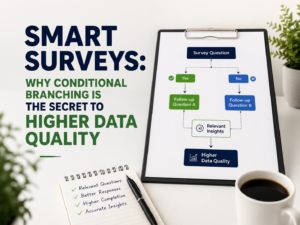


In 2026, businesses are more dependent than ever on customer feedback, market research, and real-time consumer insights. Companies across industries use surveys to understand customer expectations, improve products, optimize services, and make smarter business decisions. However, one question continues to dominate discussions among marketers, researchers, SaaS companies, and business owners:
Should surveys be short or long?
The answer matters because survey response rates directly affect data quality. Even the best survey questions become useless if customers never complete the survey.
As digital attention spans continue shrinking, businesses are searching aggressively for smarter strategies on how to increase survey response rates without sacrificing valuable insights. Some companies believe shorter surveys are the best solution because users prefer faster interactions. Others argue that longer surveys provide deeper insights that businesses truly need.
The reality in 2026 is more nuanced. Survey success no longer depends only on length. It depends on user experience, personalization, timing, relevance, mobile optimization, and intelligent survey design.
Modern survey platforms powered by AI are changing the entire conversation around survey length.
Why Survey Response Rates Matter So Much
Survey response rates are not just marketing metrics. They directly affect the accuracy and reliability of business decisions.
When only a small percentage of people complete a survey, businesses often end up with incomplete or biased data. This can create misleading conclusions that negatively impact marketing strategies, product development, customer experience improvements, and overall business planning.
Higher response rates generally lead to:
- More reliable customer insights
- Better market research accuracy
- Stronger customer understanding
- Improved decision-making
- More accurate trend analysis
This is why businesses continue researching how to increase survey response rates. Companies understand that better participation leads to better business intelligence.
In highly competitive industries like SaaS, e-commerce, healthcare, education, and digital services, even small improvements in survey completion rates can provide major competitive advantages.
The Modern Consumer Attention Problem
The digital environment in 2026 is extremely crowded. Customers receive endless notifications, emails, advertisements, app alerts, and feedback requests every day.
As a result, people have become highly selective about where they spend their time and attention.
This shift has dramatically changed survey behavior.
When users see surveys that appear long, repetitive, or time-consuming, many simply ignore them. Others start the survey but abandon it halfway through because the experience feels exhausting.
However, businesses also face another challenge: collecting meaningful insights often requires more than just a few simple questions.
This creates a difficult balancing act between convenience and depth.
The most successful businesses today understand that improving response rates requires understanding customer psychology.
People are far more likely to complete surveys when:
- The survey feels relevant to them
- Questions are personalized
- The process feels simple and fast
- The value of participation is clear
- The survey experience feels modern and engaging
This means survey design is becoming just as important as survey length itself.
Why Short Surveys Usually Perform Better
Short surveys have become increasingly popular because they align with modern digital behavior.
Most users today prefer quick interactions, especially on mobile devices where attention spans are naturally shorter. Customers are far more likely to answer three quick questions than complete a lengthy questionnaire with multiple pages.
This is one reason short surveys often produce better completion rates.
Short surveys are commonly used for:
- Customer satisfaction feedback
- Net Promoter Score (NPS) surveys
- Post-purchase feedback
- Quick product reviews
- Event feedback collection
- Customer support ratings
The simplicity of short surveys reduces friction. Customers do not feel overwhelmed, which increases the likelihood that they will participate and complete the survey.
In fast-paced digital environments, convenience often drives engagement.
How Short Surveys Improve User Experience
One of the biggest reasons short surveys perform well is because they respect the customer’s time.
Modern consumers value speed and convenience. Businesses that ask for feedback in a simple and efficient way often create a better overall customer experience.
For example, imagine receiving a one-question survey immediately after a customer support interaction. Completing that survey takes only a few seconds.
Now compare that to receiving a 25-question form asking about every aspect of the experience.
The shorter survey feels manageable, while the longer one may feel frustrating or unnecessary.
Businesses focused on how to increase survey response rates often discover that reducing survey length immediately improves participation rates.
Short surveys also work extremely well in mobile-first environments, where users expect fast and seamless interactions.
The Problem with Extremely Short Surveys
Although short surveys often improve completion rates, they are not always the perfect solution.
One major issue is limited insight depth.
Businesses sometimes need detailed feedback to understand complex customer behaviors or identify deeper problems. Extremely short surveys may reveal that customers are dissatisfied, but they often fail to explain why.
For example, a one-question satisfaction survey might reveal that customers are unhappy with a software product. However, it may not explain:
- Which feature caused frustration
- Whether onboarding was confusing
- If pricing expectations were unclear
- Whether customer support created problems
Without detailed context, businesses may struggle to make meaningful improvements.
This is where longer surveys still provide important value.
Why Long Surveys Still Matter in 2026
Despite the popularity of shorter surveys, long-form surveys remain essential in many industries and research environments.
Businesses still use detailed surveys for:
- Market research studies
- Employee engagement analysis
- Academic research
- Product development feedback
- Healthcare research
- Enterprise customer intelligence
Long surveys allow organizations to collect more detailed behavioral, emotional, and demographic information.
For example, a SaaS company investigating customer churn may need extensive feedback about:
- User onboarding
- Product usability
- Feature adoption
- Pricing perception
- Customer support experiences
- Competitor comparisons
This type of analysis often requires more detailed questioning.
In-depth research cannot always be reduced to a few quick questions.
Survey Fatigue: The Biggest Risk of Long Surveys
The biggest problem with long surveys is survey fatigue.
As surveys become longer, participants often lose focus and motivation. Many users begin rushing through questions without reading carefully, while others abandon the survey entirely before completion.
This creates serious data quality problems.
Businesses sometimes assume that asking more questions automatically leads to better insights. In reality, overloaded surveys frequently produce inaccurate or unreliable responses because participants become mentally exhausted.
Survey fatigue can lead to:
- Lower completion rates
- Random answers
- Incomplete responses
- Reduced engagement
- Poor data accuracy
This is one reason why businesses continue searching for better strategies on how to increase survey response rates while still collecting meaningful insights.
AI Is Changing the Future of Surveys
Artificial intelligence is transforming survey strategy in 2026.
Instead of forcing businesses to choose between completely short or completely long surveys, AI-powered platforms are creating adaptive survey experiences.
Modern AI survey systems can:
- Personalize question flows
- Remove irrelevant questions
- Detect survey fatigue
- Optimize question order
- Adjust survey length dynamically
- Predict completion likelihood
This creates smarter surveys that feel shorter to users while still collecting deeper insights for businesses.
For example, two customers may receive different survey experiences based on:
- Previous responses
- User behavior
- Customer journey stage
- Purchase history
- Feature usage patterns
This personalization dramatically improves both engagement and data quality.
The future of surveys is becoming increasingly intelligent rather than simply shorter.
Mobile Optimization Is Now Essential
In 2026, most surveys are completed on smartphones and tablets.
This has completely changed how businesses should design surveys.
Long surveys often perform poorly on mobile devices because excessive scrolling and repetitive question formats create frustration.
Businesses focused on how to increase survey response rates now prioritize:
- Mobile-first design
- Faster loading speeds
- Simple navigation
- Conversational layouts
- Progress indicators
- Touch-friendly interfaces
A well-designed mobile experience can significantly improve survey participation regardless of survey length.
Modern survey platforms are increasingly focusing on user experience design rather than simply reducing question counts.
So, Which One Performs Better?
In most situations, short surveys produce higher completion rates because they reduce friction and feel easier to complete.
However, this does not automatically mean short surveys are always better.
The highest-performing surveys in 2026 are not defined only by length. They are defined by:
- Relevance
- Personalization
- Timing
- Simplicity
- Mobile optimization
- Intelligent design
A poorly designed short survey can still fail badly. At the same time, a highly relevant and personalized long survey may generate excellent engagement if users see value in completing it.
The goal is not simply to make surveys shorter.
The goal is to make surveys smarter.
Best Practices for Increasing Survey Response Rates
Businesses that want stronger survey performance should focus on improving the entire survey experience rather than obsessing only over question count.
Surveys should feel natural, relevant, and easy to complete.
Businesses should:
- Keep questions focused and purposeful
- Personalize survey experiences
- Optimize surveys for mobile users
- Use conversational language
- Send surveys at the right time
- Avoid unnecessary complexity
- Use AI-powered adaptive survey systems
The most effective surveys respect the user’s time while still collecting meaningful insights.
That balance is what drives modern survey success.
Final Thoughts
The debate around short vs. long surveys is evolving rapidly in 2026.
Short surveys generally generate better completion rates because modern users prefer fast and convenient digital experiences. However, longer surveys still provide essential value when businesses need deeper insights and detailed research.
The future of survey success is no longer about choosing one format over the other.
Businesses focused on how to increase survey response rates are increasingly using AI-powered survey systems that combine personalization, adaptive questioning, mobile optimization, and intelligent design to create smarter customer experiences.
The companies that succeed in the future will not simply ask fewer questions.
They will ask better questions in smarter ways.
Frequently Asked Questions (FAQ)
1. Do short surveys get better response rates than long surveys?
In most cases, yes. Short surveys usually get higher completion rates because they require less time and effort from users. Modern consumers generally prefer quick and simple digital experiences.
2. Why do long surveys often have lower completion rates?
Long surveys can create survey fatigue. As users spend more time answering questions, they may lose interest, rush through responses, skip questions, or abandon the survey entirely.
3. How can businesses increase survey response rates?
Businesses can improve participation by:
- Keeping surveys simple and relevant
- Personalizing questions
- Optimizing surveys for mobile devices
- Using conversational language
- Sending surveys at the right time
- Reducing unnecessary questions
These strategies help improve the overall survey experience.
4. Are long surveys still useful in 2026?
Yes. Long surveys are still valuable for detailed market research, employee engagement analysis, healthcare studies, product development research, and enterprise-level customer intelligence.
5. What is the ideal survey length?
There is no universal perfect length. The best survey length depends on the purpose, audience, and complexity of the feedback needed. Most businesses aim for surveys that can be completed within a few minutes.
6. How does AI help increase survey response rates?
AI-powered survey platforms can personalize questions, remove irrelevant sections, optimize question order, detect survey fatigue, and create adaptive experiences that improve engagement and completion rates.
7. Why is mobile optimization important for surveys?
Most users now complete surveys on smartphones. Mobile-friendly surveys with simple layouts, faster loading speeds, and touch-friendly designs significantly improve response rates.
8. Can short surveys provide meaningful insights?
Yes, especially for customer satisfaction, NPS, post-purchase feedback, and quick experience evaluations. However, they may not always provide enough depth for complex research topics.
9. What causes survey fatigue?
Survey fatigue usually happens when surveys feel too long, repetitive, confusing, or irrelevant. Poor survey design can quickly reduce engagement and response quality.
10. What is the future of surveys in 2026?
The future of surveys is becoming more intelligent and personalized through AI-powered automation, adaptive question flows, conversational surveys, predictive analytics, and real-time customer feedback systems.